
In modern enterprise, there is a profound distinction between owning a business and owning a job. For many founders, what began as a pursuit of freedom often evolves into a high-pressure operational trap. This phenomenon, is not a failure of effort, but a failure of design.
In a recent session of The Xponent Experience, Beyers Hauptfleisch, CEO of Xponent, shared a deep dive into the mechanics of company valuation. The discussion moved beyond the superficial metrics of turnover and “hustle,” focusing instead on the eight core drivers that determine whether a business is an investable asset, or merely a collection of technical tasks. For the senior executive or business owner, the following synthesis provides a framework for evaluating your own organization through the lens of longevity and exit readiness.

The Technician’s Trap: The “Entrepreneurial Seizure”
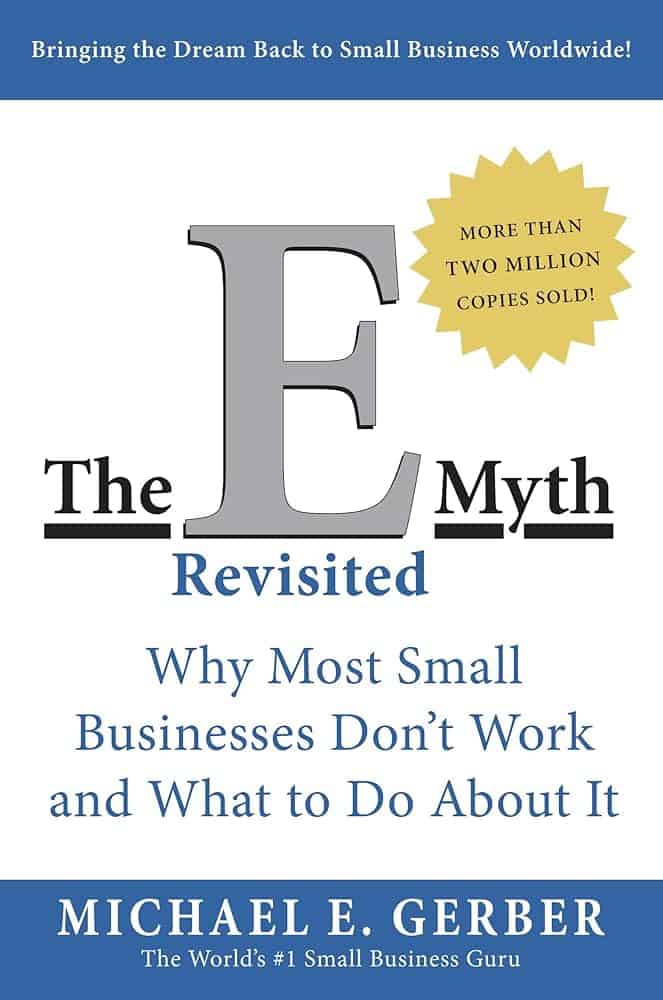
The foundation of many businesses is what Michael Gerber, author of The E-Myth Revisited, calls an “entrepreneurial seizure”. A skilled technician—an engineer, a coder, or a marketer—decides they are tired of working for someone else. They believe that because they understand the technical work of a business, they understand a business that does technical work.
This is the fundamental myth. As Hauptfleisch notes, most founders remain technicians long after the company registration is complete. They focus on production, service delivery, and operational minutiae, effectively creating a role for themselves that is impossible to delegate.
The shift from technician to entrepreneur requires a transition from being operational to being strategic. To build a company that has value independent of its founder, the owner must stop “doing the work” and start “designing the system that does the work”. This is the difference between Mark Zuckerberg writing code and Mark Zuckerberg providing the vision for Meta’s ecosystem.
The 8 Metrics of Value: The Value Builder System
Drawing from John Warrillow’s Built to Sell and the Value Builder System, there are eight specific metrics that professional investors and acquirers use to judge the worth of a company. Understanding these is critical for any leader planning an exit, whether that exit is five years or twenty years away.
The 8 Metrics of Value
The Value Builder System: Moving from Operator to Strategist
1. Financial Performance
Beyond profitability, this requires meticulous record-keeping. Clean books, signed contracts, and thorough KYC data are non-negotiable for investors.
2. Growth Potential
Buyers pay for future upside. Can you scale beyond current capacity by entering new markets or developing new products?
3. The Switzerland Structure
Neutrality and independence. Ensure the business is not overly reliant on any single customer, key supplier, or “rockstar” employee.
4. Monopoly Control
Creating a defensible “moat.” This includes strong branding, SEO dominance, intellectual property, or hard-to-replicate proprietary processes.
5. The Hub & Spoke Problem
The most critical challenge. The business must be able to thrive—not just survive—without the owner’s constant intervention and decision-making.
6. The Customer Score
A measure of referability. A high score means your customers act as your sales force, lowering acquisition costs and proving brand health.
7. Valuation Teeter-Totter
Balancing cash flow vs. capital intensity. Businesses that require massive capital tied up in stock or equipment have a longer, less attractive ROI window.
8. Recurring Revenue
The gold standard. Guaranteed future income streams, such as subscriptions or service level agreements (SLAs), significantly increase value.
1. Financial Performance
While profitability is the baseline, the quality of financial record-keeping is often where value is lost. Investors look for “efficacious” bookkeeping. This includes meticulous Know Your Client (KYC) documentation, signed contracts, and updated supplier records. A business that cannot produce clear, historical transaction data at a moment’s notice is seen as a high-risk liability, regardless of its bank balance.
2. Growth Potential
Acquirers are not just buying what you have done; they are buying what you could do. This is often analyzed through the Ansoff Matrix:
- Market Penetration: Can you serve more people in your existing market?
- Market Development: Can you find new markets for your existing products?
- Product Development: Can you serve your existing market with new products?
- Diversification: New products for new markets.
A company at maximum capacity with no clear path for expansion is significantly less valuable than one with a scalable “moat.”
3. The Switzerland Structure
Named for the country’s history of neutrality and independence, this metric measures your company’s reliance on any single external force. To have a high value, you must ensure you are not overly dependent on one major customer, one key supplier, or one “rockstar” employee. True resilience requires redundancy; if the departure of one person or the loss of one contract can cripple the business, you don’t have an asset—you have a fragile situation.
4. Monopoly Control
In a marketing context, “monopoly” refers to the creation of a “capital moat” or a “brand moat”. This can be achieved through:
- Intellectual Property: Patents, copyrights, and trademarks.
- Search Dominance: Ranking #1 on Google for a specific niche.
- Proprietary Processes: Standard Operating Procedures (SOPs) that are difficult for competitors to replicate.
- Capital Moats: Building an infrastructure so large and efficient that the cost for a competitor to enter the market is prohibitive.
5. The Hub and Spoke Problem
This is perhaps the most common challenge for SMEs. It asks: “How dependent is the business on its owner?”. Hauptfleisch suggests a “complete air gap” test: If you left the business for a month with no communication, would the company be worse off, the same, or better when you returned?. A truly valuable company is one that actually improves in the owner’s absence because the systems and delegated authorities are robust enough to handle business development and conflict resolution without founder intervention.
6. The Customer Score
This is essentially a measure of referability. How likely are your customers to recommend you?. High customer satisfaction is not enough; you need a brand that carries enough weight and trust that the “referral engine” runs automatically. This reduces the cost of acquisition and increases the company’s “goodwill” on the balance sheet.
7. The Valuation Teeter-Totter
This concept looks at the relationship between capital intensity and cash flow. If you sell a business for R10 million, the buyer wants to know their Return on Investment (ROI) window. A business that requires massive amounts of tied-up capital in stock or equipment to generate a small profit is less attractive than a “capital-light” business. The goal is to maximize the multiplier by proving the business can generate high returns with minimal cash injections.
8. Recurring Revenue
Guaranteed future income is the “holy grail” of valuation. While many focus on software-as-a-service (SaaS) models, Hauptfleisch notes that a “blended model”—combining upfront project revenue with recurring Service Level Agreements (SLAs)—often provides the best balance of growth and stability.
Integrating Strategy into Operations
Xponent view every technical intervention through the lens of these eight metrics.
- Marketing & Branding: These are not just about “getting leads.” Effective branding creates an “imperfect monopoly,” making the company more independent of price fluctuations and more attractive to top-tier talent.
- E-Learning & Training: By capturing proprietary knowledge in digital formats, a business solves the “Hub and Spoke” problem. It allows for the rapid onboarding of staff without the owner having to personally train every individual.
- Technical Infrastructure: High-performance hosting, clean code, and automated systems directly impact “Financial Performance” and “Growth Potential” by ensuring the business can scale without technical debt.
The Importance of the Exit Mindset
Building a valuable company is a service to your team and your future self. Even if you have no immediate intention to sell, building an “investable” business means you have created a sustainable, ethical, and efficient machine. It provides your employees with security and opportunities for growth within a larger structure, should the company eventually be rolled up into a bigger group.
You can watch the full podcast episode
FAQ: Building Business Value
Q: I don’t plan on selling my business anytime soon. Why should I care about an exit strategy? A: An “exit strategy” is essentially a “sustainability strategy.” By building a business that could be sold, you are building a business that can run without your constant presence. This reduces founder burnout, increases profitability, and ensures the business can survive unexpected life events.
Q: What is the first step in moving from a “Technician” to a “Strategist”? A: Documentation. Start by identifying the tasks only you can do and begin creating Standard Operating Procedures (SOPs) for them. The goal is to create a “proprietary process” that someone else can follow to achieve the same result.
Q: How does branding affect my company’s actual valuation? A: Branding creates “Monopoly Control.” When a customer asks for your product by name rather than searching for a generic “service,” you have a monopoly on that specific brand. This allows for higher margins and makes you less dependent on price-sensitive market shifts (the “Switzerland Structure”).
Q: My business is very capital-intensive. Does that mean it will always have a low valuation? A: Not necessarily, but it does affect your “Valuation Teeter-Totter.” To offset high capital intensity, you must demonstrate strong “Monopoly Control” (like a capital moat) and high “Recurring Revenue” to prove that the investment eventually yields a predictable and significant return.
Q: How do I measure my “Customer Score” accurately? A: Many businesses use the Net Promoter Score (NPS) or simply track the percentage of new business that comes from referrals versus paid advertising. A high “referability” factor is a leading indicator of brand health.